Books read in March, 2025

Books read April 2005

Books read April 2025

Alister E. McGrath: Surprised By Meaning: Science, Faith, and How We Make Sense of Things, Louisville, Westminster John Knox Press, 2011.  

An outstanding defence of the Christian Gospel by a scientist, theologian and prolific author of theological issues and Biblical history. McGrath opens up his subject with a challenging analysis of why we long to make sense of things and yearn to see the whole picture of our world and its story with us in the middle. McGrath regularly challenges leading atheistic writers like Richard Dawkins who seem to have spent their lifetime trying to prove that the Universe “has no design, no purpose, no evil  and no good, nothing but blind pitiless indifference.

McGrath quickly establishes the important point that although Sciences may able to say many things about the universe there are many issues about which scientists cannot be expected to say anything at all. These issues include ultimate questions such as  what is the point of living, what are we here on earth for, what is ethical, and in what direction should science move in the areas of eg weapons of mass destruction, moral guidance, social purpose and personal identity.  McGrath notes that science is morally blind and atheist Richard Dawkins himself admits that “science has no methods for deciding what is ethical”. 

Chapters in McGrath’s book include issues such as the “longing to make sense of things”, “important beliefs that cannot be proved eg the chemical formula for water”, how we make sense of things, the human quest for meaning (beyond the scientific horizon), a Christian view point on surprised by meaning, the deep structure of the universe, the mystery of the possibility of life, accidents of biological history, history/culture/faith issues/ The heart’s desire and longing for significance/surprised by meaning, and a thoughtful conclusion.

The author includes detailed notes and information and a very useful index.

I have read many of McGrath’s books over the years. This is one of his best I think

Alister McGrath: What’s the Point of Theology: Wisdom, Wellbeing and Wonder: p/b, London, SPCK, 2023.  

Alister McGrath, coming to the end of his outstanding career as a theologian, writer and pastor, has written an excellent book defending the role of theology in Christian life and the church. McGrath defends theology’s usefulness in that different writers see new and different issues and elements in the Scripture as spiritual needs and experiences change through time. A second defence is the need for a connection between the theological components of Christian faith including the incarnation, faith, and theological disagreements. This section also includes an overview of Christian theology. At the same time McGrath defends theology against  ordinary Christians who challenge its usefulness and its dominance in Western Christianity. 

The second major chapter includes McGrath’s defence of the question “why theology matters” using Popper’s argument that the human encounter with religious faith is just as important as the physical and psychological worlds.  Another major section focuses on the importance of the incarnation, its meaning and value, and a further major section develops the importance of  Wonder.  Under this heading McGrath includes seeing and respecting God’s creation, the mystery of God, the complexity of the Trinity, and an understanding of glory, worship and spirituality. 

The third major section deals with wellbeing….respecting God’s creation, the intellectual appeal of Christian faith, the mystery of speaking about God, the failed quest for certainty, and glimpses of the glory involved in theology, worship and spirituality.

The concluding chapters involve the issues of theological education, theology and faith, and a final section on the original title “What’s the point of theology”. McGrath’s material comes with excellent notes, questions for reflection, and suggestions for taking things further.  A lack of a detailed index is a weakness in my view.

McGrath has produced an outstanding defence of Christian theology which would be of significant value in Christian discussion and study groups.  5 stars.

Ken Piesse: The Taylor Years: Australian Cricket 1994-99, Foreward, Ian Healy, h/b, Viking Books, Australia, 1999.  

Ken Piesse has written an outstanding account of the extraordinary achievements of Australian cricketing legend Mark Taylor who led the Australian cricket team from May 1994 until 1999.  Australia’s  international cricket team had achieved outstanding results against England, New Zealand, South Africa, Sri Lanka, India and many other nations, but for twenty years the Australian team had been unable to conquer the West Indies in the Caribbean. Under Taylor’s exceptional leadership the Australian cricket team achieved two outstanding victories in the West Indies, breaking through very tough opposition as well as achieving outstanding results against every cricketing nation.

This is a book for cricket tragics but it is also written with understanding and clarity and can be understood even by non cricket buffs like myself.  Mark Taylor’s own remarkable personal cricket achievements are well described. Taylor had a catching ability at first slip which I doubt has ever been beaten. Nevertheless he had some serious challenges including a period where his own ability to make runs very nearly caused him to quit his role as Australian captain. Another key feature of this book is a collection of well written summaries of the other outstanding Australian players of his period including Shane Warne, Michael Slater, Greg Blewett, Glenn McGrath, David Boon, Craig McDermott, Mark Waugh, Ian Healy, Stuart MacGill and Steve Waugh. 

This well put together book includes a generous number of cricketing moments in both black and white and colour. In addition, for genuine cricketing buffs there is a substantial statistical section including series result, records versus each country, home and away records, narrow and largest  margins of victory, the toss, instances when Taylor sent the opposition in, highest innings total, completed innings against all nations, all players who played under Taylor, with batting records of runs scored, centuries achieved, carrying bat through completed innings, highest individual scores, partnerships above 200, partnership records for each wicket, bowling records in order of most wickets captured, ten wickets in a match, five, six and more wickets in an innings, hat-tricks, wicketkeeping dismissals, Australian catches in the field, century partnerships, Australia’s leading Test captains, batting records of Australian captains from Bradman to Taylor, and  Details of Mark Taylor’s fifty tests as captain. In addition the book contains a detailed index and a useful list of over 25 books for further reading.

For true cricketing buffs this book will not let you down.  5 stars
Books read 2024

Amor Towles: Table For Two, p/b, London, Hutchinson Heinemann,2024.  

American author Amor Towles breakthrough and very popular novel A Gentleman in Moscow, provides an excellent platform for his collection of short stories entitled Table For Two. Towles includes six New York based short stories and an extended story based on a Los Angeles mystery to captivate his readers once again.

Based on events in emerging Soviet Russia, The Line follows a fascinating relationship between a wife prepared to contemplate living in the United States in order to challenge the American way of life and a husband who is keen to embrace the American new world.

The Ballad of Timothy Touchett is a clever account of a literature graduate who gradually and almost unwittingly leads himself into an illegal business which can only end in trouble. 

Hasta Luego follows the experience of an airport traveller who befriends a fellow traveller only to find out incidentally that his new friend was actually in need of real assistance and that he was the only person in the airport that could really help. 

I will survive tells the story of a second marriage which comes under pressure due to a desire on the part of one of the partners to restart a former hobby which had been discarded.

The Bootlegger tells a fascinating account of a keen theatre goer who gets annoyed by a fellow theatre buff who he thinks is recording the presentations illegally. His attempts to prevent this from happening result in a series of very awkward events. 

The DiDomenico Fragment relates a complex story of art and artists and one person’s attempt to help a family in need. 

Eve in Hollywood is an extended story involving an engaging account of Hollywood events in Los Angeles. The story relates a significant attempt to steal from and blackmail a budding actor with serious results.

Table For Two is a relaxing and easy to read set of short stories which quickly engage the reader and do not demand too much trauma or deep thought. A wonderful book to read on a relaxing holiday!  5 stars

Peter Grose: : An Awkward Truth: The Bombing of Darwin 1942, p/b, 

Crows Nest, Allen & Unwin, 2009.

 Peter Grose has written an excellent blow by blow account of the first two bombings of Darwin in World War 11.  The huge assault  of so many Japanese fighter planes on unsuspecting Darwin on 19 February 1942 catapulted the city into total chaos. 

On an unusually dry day in February over 30 Japanese war planes demolished large parts of Darwin resulting in approximately 300 death and total chaos.  A secondary assault was not far off and in total almost 30 air attacks found their way to Darwin between1942 and 1944.

Although it was known as a possible target in no way were the residents or the military in any serious way prepared for such an onslaught.  The result of the deaths and destruction was chaotic. Large numbers of people including those who were needed to protect the town headed for Adelaide by any means possible including walking, trains, ships, cars and any other transport. The designated. Internal tensions and poor administration had resulted in the complete absence of any civil defence. Air-raid wardens has resigned en masse and the army leadership were unable to prevent many of their members from escaping if they could. The Leading Administrator in Darwin Aubrey Abbott proved on several occasions to be seriously unequal to the task. The resulting exodus left the town a sitting duck for looters who took away with them anything that wasn’t destroyed by the air attacks. 

Peter Grose’s carefully researched account makes for horrifying reading and in reality the town was virtually left to its own devices with a few valiant heroes trying to pick up the pieces. The story is carefully and accurately written with careful attention to the various surviving documentation. 

This is a fascinating story which if you had not read the documented material you might find impossible to believe.  Effectively at the end, Darwin had to just about begin again! 5 stars 

Karl Barth: Church Dogmatics  (Volume 1) The Doctrine of the Word of God, 2nd Edition: Ed. G W Bromiley & T. F. Torrance: p/b, New York, T & T International, 1975, p/b 2004.  

German/Swiss theologian Karl Barth  (1886-1968) was an extraordinary theologian, author, major contributor to the German Barmen Declaration and fierce opponent of Nazism. Barth’s five volumes of the Church Dogmatics runs in the English translation to 6 million words and 9000 pages!  Master of Latin, German and French and fierce opponent of  both Modernistic Protestantism and Mediaeval Roman Catholicism, Barth has made a huge impact on many theologians and readers of many streams of the Christian faith.

Having said that all that in praise of Karl Barth I have to say that Barth’s 2nd edition of The Doctrine of the Word of God is certainly the most difficult book I have ever read and I have read one or two books in my time.  I  am quite uncertain if I have the courage to contemplate his volume 2, let alone volumes 3 -5 …I suspect I may have to ask for a volume in heaven!

What is the problem I hear you asking!   First 489 pages is a very solid paperback but then so are many very good large books.  Secondly whilst the major two thirds of his book are printed in standard paperback size, the other third of the material is written in quite small print and in most cases the Latin, Greek, German and French sections are not translated. Whilst it does not take much time to translate a sentence or two of Greek or Latin into English, to do so in large paragraphs defies enthusiasm. I could live with that but the strain was expanding! The third hardest part of reading Barth is that many of his paragraphs are simply plain difficult and in some cases impossible to read. I have to admit to getting lost on more than one occasion.

On the plus side there are some things written in this major work that I am very glad to have pondered. Here are a few: 

Theology is the criticism and correction of talk about God  according to the criterion of the Church’s own  principles. (p6)

One might have thought that the attempt to speak of believing man apart from God had shown itself to be impractical. (p.37)

Grace is the event of personal address, not a transmitted material condition. (p41)

Talk about God in church must be related to a prior Word of God Himself. (p.43)

God is not bound to the historical church.  (p.48)

Tillich’s distinctive teaching ultimately makes it irrelevant as a contribution to the work of theology. (p55)

Ambrose: Not with logical argument was God pleased to save people. The Kingdom of God is in the simplicity of faithfulness, not in contentious sermons.

Dogmatics must not dominate proclamation (p85)

Real proclamation means the Word of God preached. P90

Between God and true service of God there can be no rivalry. (p94)

Church proclamation must continually become God’s Word. (p117)

The Church is in the place of revelation, of mercy and of peace. ( p156)

To evade the security of God’s Word is to evade Christ. (p168)

Grace would not be grace if God could not give and also refuse this reality and with it this possibility. (p224)

Luther: In faith all things must be put out of sight save the Word of God. (p234)

Althaus: I do not know whether I believe, but I know in whom I believe. (p237)

The incomprehensibility of the fact that the Word of God is spoken to man. (p.249) 

Faith may lose theological relevance but it can lose it only to fight it again. (p255)

The Bible finds voice in the Church. (p261)

Man’s work in Church proclamation can and should become God’s work. (p289)

We must keep to Holy Scripture as the witness of revelation. (p295)

God reveals himself as the Lord! Revelation is never the same but always new. (p306)

The Biblical concept of revelation is itself the root of the doctrine of the Trinity. (p334)

God is found in Jesus because in fact Jesus himself cannot be found as any other than God. (p405)

Jesus Christ is the eternal son of the eternal father. (p427)

We cannot delimit the Father, Son and Holy  Spirit from each other. (p476)

P T Forsyth: The Cruciality of the Cross: h/b, London, Hodder & Stoughton, 1910.   

Theologian P T Forsyth (1848-1921) was arguably the outstanding British theologian of the early C20th. Forsyth studied at the University of Aberdeen and in Gottingen, Germany under Albert Ritschl. After leading four parishes in England Forsyth became the Principal of Hackney Theological College which eventually became the University of London.  Forsyth published 32 books based around Christian Theology. 

The Cruciality of the Cross deals with the Atonement in four chapters: The Atonement Central to the New Testament Gospel; The Atonement Central to Christian Experience; The Atonement Central to the Leading Features of Modern Thought (in 1909); and a shorter chapter on The Moral Meaning of the Blood of Christ. 

Whilst one or two words have dropped out of the English language in 73 years Forsyth is still very readable and worth a second look. Forsyth’s work on the Atonement as central to the New Testament makes for lively reading even if his remarks on “gloomy Paulinism” come as a bit of a surprise. 

Forsyth reminds us that the Apostle Paul remarkably  received his Christian instruction from early Christians after his encounter with Christ on the road to Damascus to imprison Christians. Forsyth writes as a starter: The whole history of the Church shows that there can be no standing unity of faith, spirit, or fellowship between those who to whom Christ’s death is but a great martyrdom  and those to whom it is the one atonement of the world and God, the one final treatment of sin, the one compendious work of grace, and the one hinge of human destiny!

Whilst Forsyth agrees that the great question of the hour for the Church’s belief is Christological, nevertheless it is the question of the Cross all the same. Jesus is Christ and Lord by His cross. Reading Forsyth for the first time gave me pause to ponder how often I have heard preaching about the Cross of Christ in Church on Sundays and without being particularly critical I think “not very often” except perhaps at Easter.  This book is not hard to find and would make a very helpful starter coming up to Lent.  I warmly commend this easy to read book.

P T Forsyth: The Church and the Sacraments, London, Independent Press Ltd, 1953 (1927)  

Peter Forsyth’s detailed study of the Christian Church and its sacraments is a challenging read. Published in 1927 and seldom read nowadays his work on one level demonstrates how thin C21st century theological writing has become since books like Forsyth’s were being published in the 1920s.  In Part 1, writing about the church and its sacraments, Forsyth leaves no stone unturned. In just over 150 pages, Forsyth deals in detail with the free churches but gives plenty of attention to Catholicism and Anglicanism. In separate chapters he covers the church and unity, the church and history, the idea of the Kingdom of God, the dream of federation of the churches, and the sacramental ministry of the churches.  Then in part 2 he devotes a further 150+ pages to baptism, holy communion and mysticism, with a final brief but helpful attention to theosophy as opposed to theology and theodicy.

Forsyth’s writing is dense and demanding and he covers a lot of ground at times moving very quickly over significant ideas that need more explanation and exploration. From time to time Forsyth reminds both clergy and laity of the importance of well-trained church leaders equipped with accurate and deep learning about both the Biblical text and Church History. His treatment of infant baptism is fair to both sides and again very helpful without offering a final opinion.  Interestingly he notes that churches  practising infant baptism have made a great mistake in dropping confirmation, or in not treating the entry on membership in a like solemn way. (p.216).  My personal experience with Anglican confirmation was deeply meaningful to me and I think confirmation in the Anglican Communion in Australia is still frequently practised.

I am glad to have read this book and I am sure I will return to some of its central ideas. 4 stars.

Graham Greene: The Third Man and The Fallen Idol, Intro: Ian Thomson, p/b, Vintage, London, 2005 (1954,1955).  

The Third Man was written originally as a draft for a screen play but its taught, fast moving events make for an engaging and sharp novel. Based in post-war Vienna, American Rollo Martins agrees to meet an old friend in Vienna but on arrival finds that his friend has apparently died in uncertain circumstances.  Further investigation reveals a very different and fast moving story, impossible to put down.

The Fallen Idol is a very short story involving a young boy inadequately cared for in a large home where, once again, a murder is involved.

Graham Green’s stylish writing has an energy which engages immediately with the reader and quickly leads one into complexity after complexity.  There is always another turn and not a word is wasted.   5 stars.

Richard Prideaux

Books read October 2024

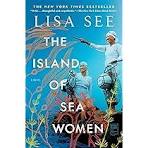
Lisa See: The Island of Sea Women: p/b, London, Scribner, 2019.  

Chinese/American highly successful author Lisa See has produced a masterpiece with The Island of Sea Women.  Whilst the characters of this account are fictional, this extremely well researched story gives an accurate account of the unique deep sea diving skills of a group of women from the island of Jeju in southern Korea.  In this small island it is the women who bring food to the inhabitants through their remarkable skills of deep sea diving which has brought food for the island’s survival over many centuries. Through early training these remarkable collective of women have developed skills of deep water swimming and capture of sea water creatures which have provided food for the survival of the inhabitants. While the men of the island do not much,  it is the women who rule the roost providing a significant amount of food for the inhabitants, alongside taking the main role in the upbringing of children and the provision of food.

Lisa See’s narrative provides an entertaining story of the ups and downs of the lives of these women against a gruelling background of the Japanese colonialism of the 1930s -1940s, World War 11, the Korean War and the modern era. The novel is engaging from the start and makes for some demanding reading which is not for soft hearts. Six pages of detailed notes provide proof of the accuracy of these amazing women over many generations. Lisa See also demonstrates the impact of C21st living which has made it harder and harder for the tiny island to find women willing to learn the demanding skill of such deep sea diving. 

This beautifully written story is a remarkable achievement in many ways. The impact of tragedy through warfare on a tiny island is heart breaking during a time that the Western world could not always be proud of the way their troops dealt with these amazing women and the other inhabitants of the island. This is genuinely a story a reader cannot put down with amazement, sorrow, horror and amazing skill  at every turn. 5/5 and rising.  

John Stott: The Last Word: Reflections on a Lifetime of Preaching, h/b, Milton Keynes,   Authentic, 2008.

The late John Stott was an extraordinary priest, teacher, writer, and world ambassador for Christ. This little book published not long before his death, focusses on John Stott the teacher. 

The book contains his 2007 Keswick Address, Becoming Like Christ; and his own Afterword. 

A comprehensive interview with Brian Draper, Director of the London Institute of Contemporary Christianity, which Stott himself set up.

“The Privileges of the Justified”, a chapter from the book John Stott at the Keswick Convention.

An essay by Mark Greene, Executive Director of the London Institute for Contemporary Christianity, which was founded by John Stott.

Essays on the Langham Partnership International  and an essay on Keswick Ministries. John Stott was deeply involved in both these organisatons. 

Named in Time Magazine’s ‘One hundred most influential people’ in 2005 John Stott has influenced vast numbers of individuals to give serious thought to the Christian faith. He has travelled in many countries around the world as a highly regarded speaker. This little book provides a useful insight into his achievements and his effective ministry throughout the world.

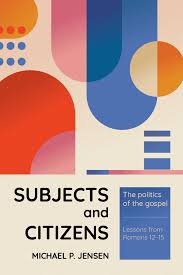
Michael P. Jensen: Between Tick and Tock: What the Bible Says about how it all begins, how it ends, and everything in between. p/b, Morning Star Publishing, Australia  

Dr Michael Jensen is Rector of St Mark’s Anglican Church in Darling Point Sydney and has also worked for many years as a theological lecturer as well as publishing articles in the secular and theological press.

Between Tick and Tock is an easy to read and thought provoking book about Christianity in three   central ideas. Chapter 1 discusses the central ideas of the Christian faith and contrasts them with three popular opponents polytheism, pantheism, and naturalism. 

Chapter two focuses on the links between Israel’s hopes and creation, Jesus Christ in Creation and Incarnation, the significance and meaning atonement, the resurrection, the Trinity and revelation.

Chapter three focuses on living as a Christian in Australia today.  In addition to these chapters Jensen has three short and helpful appendices on frequently argued issues. These cover creation and modern science, the millennium and the notion of heaven and angels. 

This is a first rate book for young Christians thinking their way through faith. In addition the book would make a first class discussion series for parish members to brush up their theology and understanding of the Gospel.  5 stars.  

books read August 2024

Images of books and authors August 2024

ANDREW PRIDEAUX. JOB, ENDURING HOPE

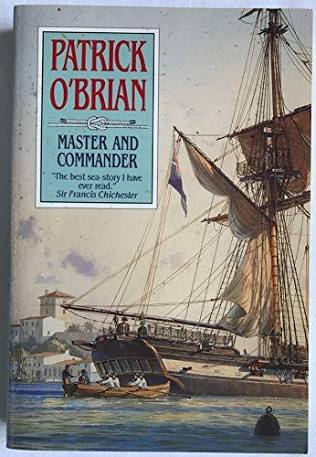
and PATRICK O’BRIAN, MASTER AND COMMANDER

Andrew Prideaux

Review of Books read August 2024

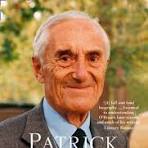
Patrick O’Brian: Master and Commander, p/b, London, Harper Collins,2002

Patrick O’Brian was a distinguished and prolific C20th English writer fluent in French, Spanish and Catalan. Married to Mary, mother of Count Nikolai Tolstoy, O’Brian was an autodidact and wrote many short stories, reviews, translations and novels. He translated Papillon from French to English, wrote a biographies of Picasso and Sir Joseph Banks and famously wrote twenty novels about the Royal Navy and the Napoleonic wars.

In brief Master and Commander, the first of his naval novels, tell the story of the impoverished Lieutenant Jack Aubrey who gains as his first command the sloop Sophie, a small but highly manoeuvrable ship. He persuades his newly found doctor friend Maturin to join him. Together they go to battle against their French and Spanish opponents during the C18th Napoleonic Wars and remain together for an additional nineteen novels!

Not being a lover of boats, ships or maritime warfare of any sort I found the first three chapters of this book demanding to say the least and unreadable to say the truth. His key character Jack Aubrey is clever at sea but makes himself ridiculous on land. His friend Maturin is thankfully, an excellent support.

Gradually and unwillingly I began to make sense of this story and to endure it rather than enjoy it. In my edition, the author’s notes indicate that all the military and and seaborne battles and skirmishes are taken directly from the Naval Chronicle and the Admiralty papers in the British Public Record Office. I found this encouraging, knowing that the events really did happen! I did note that O’Brien makes no attempt to lionise his hero and Jack Aubrey’s ineptitude in public events and willingness to bed the wives of his superiors, I am guessing, is simply demonstrating the normal routines of C18th British sea going morality!

I love to read but I have to say I will not live long enough to read the other nineteen or so volumes in this series by O’Brien. Just finally, towards the end of this story, I did find myself identifying with what C18th warfare in the world’s oceans might have been like and what a debt is owed to those who lived that life. 4 stars but never again!

Andrew Prideaux: Job, Enduring Hope, Sydney, Aquila Press, Reading the Bible Today Series, 2024

The Reading the Bible Today series has been built around Australian commentators presenting their wealth of Biblical insight on paper. Andrew Prideaux’s commentary on the Old Testament book of Job is the latest in this series. Covering 383 pages Job, Enduring Hope is no small read and his 390 footnotes demonstrate Andrew’s careful attention to the Hebrew text and his interaction with a remarkable number of modern and ancient scholars who have written on the Book of Job.

A central value of the Book of Job for readers is the pastoral benefit to those who struggle in life for whatever reason including perhaps illness or other tragedies or harmful events in their lives. Christian folk can travel along comfortably with their love for and faith in God but they are not immune from traumatic events and tragedies which can shake them way off their runway.

They, like Job, begin to seriously wonder whether God is all he is supposed to be and indeed whether he is any help at all or even is God actually there and if he is why has he allowed these things to happen to me. This is certainly Job’s situation as he cries out to God in despair and indeed in anger.

Uniquely in the Bible, Job is not a Hebrew, but comes from the land of Uz, outside God’s covenant people of Israel. Nevertheless Job remains a God-fearing man who’s life and commitment have constantly been given over to the worship and service of the God of Israel.

In the opening narrative Satan challenges God with the idea that Job only serves and worships God because of his comfortable and wealthy lifestyle. Satan suggests that if these things were taken away Job would no longer worship or be commiteedqo God but would reject him in his misery.

As the story unfolds Job loses his home, his wealth and his family and he himself suffers a horrifyingly destructive skin disease which makes him an outcast from his society and a horror to behold even to his wife who calls on him to turn against God.

Job is supported in his despair by three well-meaning friends who offer him plenty of advice with turns out to be meaningless for Job who is looking for at least a statement or a conversation with the Lord God but nothing comes.

After the failure of the three friends Job is confronted by the young Elihu whose brash and confident rebuking of Job’s desire to speak with God humiliates Job even further. Job deigns not to even comment on Elihu’s words which to him are irrelevant. Job knows he has been loyal to God and cannot believe this traumatic hurt and chaos in his life.

Finally, through a huge storm, God does address Job directly with a powerful account of his creation and sustaining of the universe in all its complexity. God does deal with Job’s trauma but he is humbled and encouraged. He quickly learns to recognise that, difficult though his situation is, God has a purpose for his world and his people, even in those things which, like his suffering, seem to make no sense at all.

Job’s faith in God and his understanding of God’s sovereign purposes had been sincere but he needed somehow to acknowledge the deeper mind of God and his purpose and to trust him no matter what trials come!

God opens Job’s eyes to the wonder of creation and a reminder of his own smallness. He gains a sense that, even in his misery, God’s power and love are for him and with him in his loss and that even though it is a mystery to him why he should suffer, he must trust God to take him through it. His view of the world and God needed to be enlarged.

In return God vents his anger on the three friends who has spoken so wrongly about Job. Indeed they are only restored because Job intercedes and prays for them. God also restores Job’s place in the world a hundredfold.

The story of Job requires careful reading and deep thinking. Readers of this commentary will find many useful insights and a thoughtful and fresh understanding of this remarkable and significant component of Scripture. This is a commentary to be read carefully and thoughtfully and it will return rich spiritual encouragement.